|
|
|

|

|

|

|
|

|

|

|

|

|
|
What We Learned at the Hall of Fame Induction Ceremony: The Importance of Influence, Inspiration and Infrastructure in Music
On April 28, 2026, inside the Fisher Center for the Performing Arts in Nashville, the Musicians Hall of Fame welcomed its newest class of inductees during a sold‑out, star‑studded ceremony. The night brought together an extraordinary cross‑section of American music: Keith Urban, Michael McDonald, Leland Sklar, Dann Huff, George Thorogood & The Destroyers, John Boylan and more - all gathered to receive medallions, jackets, and the kind of recognition that only comes after decades of shaping the soundtrack of people's lives. From the private medallion ceremony in the Brad Paisley Ballroom to the 40‑foot red carpet lined with cameras and conversation, the event created a rare moment where legends, collaborators and admirers stood shoulder to shoulder in celebration of the craft.
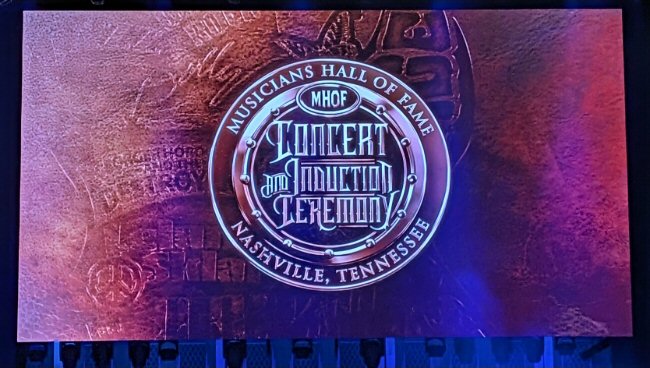
At the 9th Musicians Hall of Fame & Museum Induction Ceremony in Nashville. The purpose of the evening extended beyond celebration; it offered an opportunity to listen closely to the artists who defined multiple eras of recorded music. Along the red carpet, conversations unfolded with Ricky Skaggs, Leland Sklar, Don Felder, Steve Wariner, Keith Urban, Vince Gill, John Boylan, Steve Lukather and George Thorogood - each offering a piece of a larger mosaic. Their answers were not rehearsed or polished; they were lived‑in, honest and revealing. As the night progressed, it became clear that these brief exchanges were not isolated moments - they were threads waiting to be woven into a single, meaningful idea. Being that musicians were being celebrated, MCN's founder Rockin’ Rich Lynch arrived at his position on the red carpet armed with a dozen distinguished questions designed to engage the highly acclaimed legends who were about to cross his path. Each query had been shaped to draw out insight rather than soundbites, inviting artists to reflect on the forces that molded their careers and the systems that supported their success. As the procession of inductees and presenters made their way down the line, Lynch's thoughtful prompts created a space where influence, inspiration and the often‑overlooked infrastructure of music could rise naturally to the surface. When we asked rock legend George Thorogood one of the questions at the heart of our thesis - "What's the song that changed your life?" - he didn't hesitate. His answer came with the force of a memory that had never cooled. "I probably think the one that opened up for me was One Bourbon, One Scotch, One Beer," he said, recalling the moment he first heard John Lee Hooker's version. “I knew that was something just different than just blues." In that instant, Thorogood wasn't just naming a song; he was identifying the spark that lit the fuse. As he continued, the deeper truth of the night revealed itself - the power of influence and inspiration in shaping a musician's path. Thorogood described seeing Hooker perform the song live, and the scene he painted was electric. "People would go see blues artists and sit like in reverence - like in church," he said. "But when I saw John Lee Hooker, everybody was dancing." It was a break in tradition, a moment when the rules bent and the room moved. That shift didn't just entertain him - it rewired him. And then came the detail that tied the entire evening's theme together: "He did this song One Bourbon, One Scotch, One Beer and the dance floor was packed - and they were all women!" Thorogood laughed as he said it, but the meaning was unmistakable. A single performance, a single artist, a single song had the power to change the energy of a room - and the direction of a young musician's life. On a night dedicated to honoring the architects of sound, his story became a perfect reminder of the invisible infrastructure beneath every career: the moments, mentors and musical shocks that set an artist on their way. When we turned to one of the most recorded bass players in modern music history, Leland Sklar, we asked him another question that sits at the heart of our thesis: "If you could freeze one musical moment forever - a show, a session, a night - which one would you choose?" Sklar didn't rush his answer. He let it breathe, the way only a man with five decades of stories can. "Oh, my God... that's really just impossible at this point in my life," he mused, acknowledging the sheer volume of magic he's witnessed. "Of course, there have been some magical moments. But I'm looking at tonight. I think this is really so special. I'm really excited about being here. I'm so flattered and humbled by this whole event."
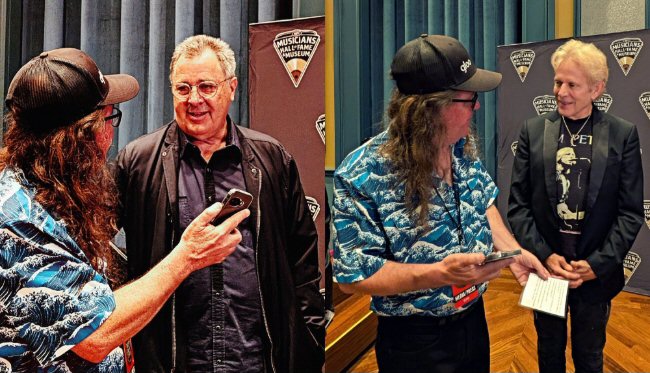
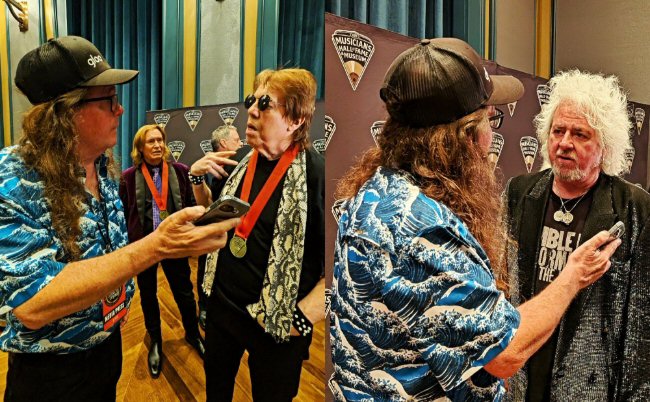
MCN's Rockin' Rich Lych speaks to Vince Gill, Don Felder, Steve Lukather and George Thorogood at The Fisher Center. His voice carried the tone of someone who wasn't just attending an induction ceremony - he was feeling it. Sklar spoke with genuine warmth about the night, the honor and the city he was standing in. There was no pretense, no canned answer. Just gratitude. Just presence. Just a legend recognizing the weight of the moment in real time. Then he shifted into memory, and the room seemed to widen around him. "I came here for, like, 12 years - almost every other week all through the '80s," he said. "Jimmy Bowen brought me here, and I was doing all the early Reba and Vince and Patty Loveless and Suzy Bogguss. You name it." It was a roll call of country royalty, delivered by a man who helped define their sound. His connection to Nashville wasn't casual - it was carved into the city's musical DNA. And when he added, "So I have a fondness in my heart for Nashville," it landed with the quiet authority of someone who truly means it. This wasn't nostalgia. This was recognition - of the infrastructure, the community and the creative ecosystem that made the 615 a second home for him. In Sklar's words, you could hear the thesis of the night echo back: the artists we celebrate are shaped not just by their influences, but by the places and people who support them along the way. Soon the legendary producer John Boylan - the man who helped form the Eagles, remains Linda Ronstadt's longtime manager, delivered the first monster‑selling Boston album, shaped the best‑known Little River Band hits, produced Charlie Daniels' "The Devil Went Down to Georgia", and steered REO Speedwagon's "Roll With the Changes" - stepped in front of us on the red carpet. His presence alone was a reminder of how much invisible architecture sits behind the music we call classic. Boylan isn't just a producer; he's one of the quiet engineers of American radio memory. We went off-list to ask him: "Do you think the big AOR sound that you helped create will ever come back in a similar way?" It wasn't a nostalgia trap - it was an inquiry into influence, cycles and the infrastructure of taste. Boylan paused, then answered with the kind of clarity that only comes from decades of watching the industry evolve. "Well, Paul Simon said, every generation runs a hero up the pop charts," he remarked thoughtfully. "My son is 25, my daughter's 40. They're going to have their own music, and that's the way it should be, you know, right?” His response wasn't dismissive - it was philosophical. Boylan wasn't mourning the past; he was acknowledging the natural turnover of cultural leadership. He understands that influence isn't a straight line - it's a relay. Each generation inherits tools, sounds, and structures from the one before, then builds something new atop that foundation. That's the infrastructure at work: the studios, the producers, the radio formats, the songwriting traditions, the sonic expectations that shape what "hits" even means. When he added, "I don’t know if AOR, you know, classic rock could come back. Of course, it still has radio stations that play it all day - which I'm glad of because I like to listen to them. But as far as going to be in the top 10 singles, no? Probably not," Boylan wasn't closing a door. He was defining the ecosystem. AOR lives on as a permanent layer of the musical landscape - a genre with its own infrastructure, its own loyal audience, its own gravitational pull - even if it no longer sits at the center of the pop universe. In his words, you can hear the thesis again: influence endures, inspiration evolves and the infrastructure keeps the whole system standing. When Ricky Skaggs stepped onto the red carpet - himself a proud member of the Musicians Hall of Fame and serving as a special presenter for the evening - he carried the quiet authority of someone who has lived every corner of American roots music. Before he even answered a question, Skaggs radiated the message at the heart of the night: the artists onstage may get the spotlight, but it's the musicians who make the music breathe. He has always been a champion of the sidemen, the session players, the pickers and players who turn songs into something that lasts. We asked him, "What's the word musician mean to you in light of the Musicians Hall of Fame and all that's going on tonight?” Skaggs didn’t hesitate. "Well, if it wasn't for music, we'd all be singing a cappella,” he offered with a grin, before drifting into a memory of hearing his first single on country radio - a thrill soon followed by the shock of his third track climbing all the way to number one. It was a reminder that even legends remember the first time the world heard them. But Skaggs quickly turned the spotlight away from himself and back toward the people who make the magic possible. "We need the musicians, and we need the music," he said, his voice softening into something reverent. "It's just such a beautiful language, you know, and I'm just glad God gave it to us as something that He ordained." In that moment, he wasn't talking about charts or awards - he was talking about the spiritual infrastructure of music itself, the invisible scaffolding that holds up every artist's journey. And that's where Skaggs' words lock perfectly into the thesis of the night. He understands that the Musicians Hall of Fame isn't just celebrating stars - it's honoring the ecosystem that makes stars possible. The sidemen. The session players. The unsung heroes who turn ideas into recordings and recordings into history. Skaggs' reverence for those players is more than nostalgia; it's recognition of the infrastructure that keeps Nashville - and the entire music world - alive and thriving. When Don Felder - the architect behind "Hotel California", a Musicians Hall of Fame member, and a special presenter on this star‑studded night - stepped up to the mic, he carried the calm confidence of a man who has lived inside some of the most iconic songs ever written. We asked him a question aimed straight at the heart of our thesis: "In light of this evening's event, what's the spirit of music for you - the thing you chase every time you step on a stage or into a studio?" It was meant to explore inspiration, the muse, the inner engine that drives creation. But Felder didn't accept the premise. He gently corrected it - and in doing so, revealed something deeper. "Well, I don't chase it. It just comes out of me," he said, offering a window into a creative life shaped not by pursuit, but by flow. His answer wasn't rehearsed. It was lived. It was the kind of insight that only comes from decades of trusting the mysterious current that runs through musicians at the highest level. He described how ideas arrive unannounced, whether he's "driving down a freeway" and suddenly singing a melody into his phone at 75 miles an hour, or sitting at home when a television orchestra plays a progression that sends him reaching for a guitar. These weren't grand, cinematic moments - they were everyday flashes of inspiration, caught on the fly, documented quickly, and revisited later. "I don't chase it," Felder repeated. "It just flows through me." In that line, you could hear the essence of influence and inspiration merging into something almost spiritual. And that's where Felder's perspective folds perfectly into the thesis of the night. His process isn't about infrastructure in the traditional sense - it's about the internal infrastructure of a musician: the instincts, the discipline, the readiness to catch lightning whenever it strikes. Felder reminded us that the spirit of music isn't always a hunt. Sometimes it's a channel. Sometimes the muse doesn't need to be pursued - it needs to be welcomed. And on a night celebrating the architects of sound, his words became a reminder that the greatest artists don't just create music; they allow music to move through them.
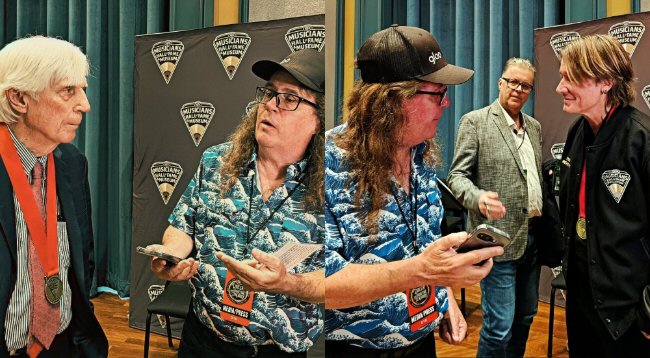
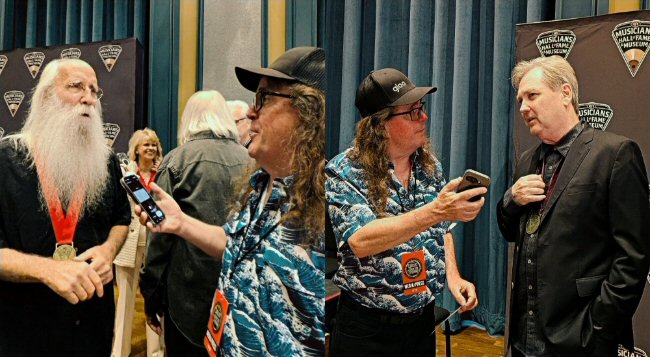
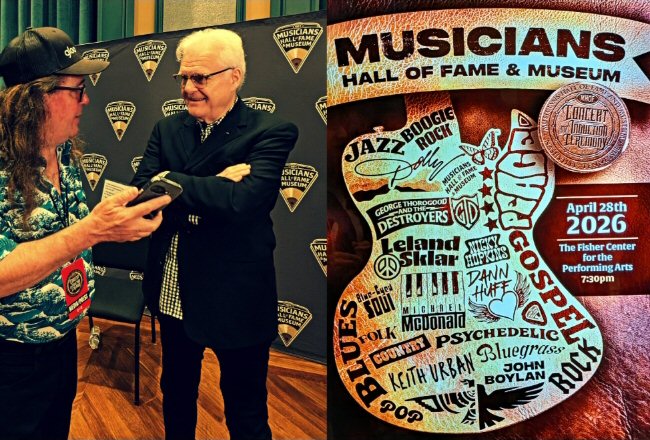
MCN's Rockin' Rich Lych speaks to John Boylon, Keith Urban, Steve Wariner, Leland Sklar and Ricky Skaggs at The Fisher Center. Next up was Steve Lukather - TOTO's six‑string architect, one of the most recorded guitarists in history, and a session man whose fingerprints are on entire decades of American music. When we asked him, "What's one piece of advice you would give your younger self on the day you first picked up the instrument?" he didn’t answer like a professor or a philosopher. He answered like a kid who still remembers the exact moment the world cracked open. "I was eight years old," he began, "and all I wanted to do was be like George Harrison." That was the spark - the moment of influence that rewired his life. He described seeing Harrison on television in 1964, the Ed Sullivan broadcast that shook the country awake. "It hit me real hard," he said. And then he delivered the kind of full‑circle moment that only a life in music can produce: "Later, I got to play the 50th anniversary of that show for Paul and Ringo. I'm in Ringo's band, too.” The kid who worshipped the Beatles ended up standing beside them. Then Lukather leaned into the surreal truth of his own journey. "Imagine that - a little punk‑ass kid like me wearing Beatle boots, and someday Ringo is going to be one of my closest friends," he said, laughing at the absurdity of destiny. "Having the honor of working with Paul and George, who I became friends with for a while." It wasn't bragging - it was wonder. It was the sound of a man still amazed by the path music carved for him. And that's where Lukather's story locks perfectly into the thesis of the night. His entire career is a testament to inspiration becoming infrastructure - the way a childhood spark can lead to a lifetime of craft, connection and contribution. Harrison inspired him. The Beatles shaped him. The Los Angeles studio system supported him. And in return, Lukather became part of the very musical architecture that once inspired him. His advice to his younger self wasn't a warning or a lesson. It was a reminder: sometimes the thing you fall in love with at eight years old becomes the thing that builds your entire life. When Steve Wariner stepped onto the carpet, he carried the warmth and humility of a man who has lived a life shaped by family, craft, and the quiet heroes behind the scenes. So we asked him the question that cuts straight to the soul of our thesis: "Who's the unsung hero behind your success - someone who would never be able to share a night like this, but still deserves a shout‑out?" Wariner didn't hesitate. His answer came instantly, instinctively. "Well, I would say my wife - she’s here tonight," he began, acknowledging the partner who has walked beside him through every season of his career. But then his voice shifted, softened and the real story emerged. "My father would be the one," he said. "He's been gone a few years now. He's the one that taught me how to play, how to write. You know, I became a man because of him." Wariner painted a picture of childhood bands with his dad and uncles, of nights spent learning the fundamentals that would one day carry him to the top of the charts. "He was obviously the major, major influence," he said. "He wanted to do what I'm doing. But he never quite got to that place. He had a house full of kids before he could achieve his dreams." When Rockin' Rich Lynch suggested, "He laid the foundation", Wariner nodded without hesitation. "He did", he said. "And I'm glad he got to live it through me." Then came the moment that tied the entire exchange into the mythology of Nashville itself. Wariner recalled the night he was inducted into the Grand Ole Opry - one of the most sacred rites in country music - and how his father stood beside him. "I look over and he's hanging out with Chet Atkins," Wariner said, smiling at the memory. "And I go, 'It don't get any better than that.'" And that's where Wariner's story locks perfectly into the thesis of the night. His father wasn't a star, a producer or a Hall of Fame inductee. He was the infrastructure - the foundation, the teacher, the encourager - the man who passed down the tools and the love of the craft. Wariner's success isn’t just built on talent; it's built on lineage, mentorship and the invisible scaffolding of family. In honoring his father, Wariner reminded everyone on that carpet that behind every celebrated musician stands someone who believed first, taught first and dreamed first. When Vince Gill stepped up to the line, he carried the relaxed confidence of a man who has nothing left to prove and everything left to play. Rockin' Rich Lynch asked him a question that fans have whispered for years: "You've been prolific with your EP series this year, celebrating your many decades in music. In your time with the Eagles so far, has there ever been any writing or recording with that group?" Gill didn't dance around it. He didn't tease. He didn't hedge. "Nope, and I don't think there will be," he said matter‑of‑factly. "You know, they haven't made a new record in a long, long time, and I don't think they would now." The bluntness of the answer caught Lynch off guard - and it would catch any fan off guard. How could a lineup with that much talent, that much history and those world‑famous voices not be tempted to see what new magic might emerge? Lynch admitted as much, marveling aloud that a group with such serious credentials wouldn't want to hear what they sound like together in a studio. It was the kind of honest reaction that only happens on a red carpet when the lights are bright and the truth slips out clean. Gill didn't flinch. He simply clarified his place in the machine. "Yeah, I know," he said with a small shrug. "I'm just, you know... I'm kind of a hired gun and doing what I'm told." There was no bitterness in his voice - just clarity. "And I have a vote on nothing." It was a rare peek behind the curtain of one of the most mythologized bands in American music. Even a giant like Vince Gill understands the infrastructure of the Eagles: a legacy so established, so carefully maintained, that new material isn't a priority. The machine runs on history, harmony and the weight of its own myth. And yet, Gill made it clear that none of that diminishes the experience. "Still, it's a great situation and a great experience to be a part of," he added. That's where his answer folds perfectly into our thesis. Influence brought him there. Inspiration keeps him sharp. But the infrastructure - the legacy, the hierarchy, the unspoken rules of a band that shaped American rock - is what defines his role. Gill isn't chasing authorship inside the Eagles. He's honoring the architecture. And in doing so, he becomes part of the living history he once admired from afar. Finally, we closed out our time on the red carpet with the performer most observers agreed stole the show - that in itself was a four‑hour marathon of music, memories and mastery. Keith Urban, fresh off putting the finishing touches on the legwork for his new double single from his much‑anticipated yacht‑rock‑inspired album dropping Wednesday, stepped into view with the easy charisma of a man who has lived his entire adult life under bright lights. Even in a room full of high‑profile presenters and Hall of Fame legends, Urban carried the unmistakable energy of someone still chasing the next horizon. Rockin' Rich Lynch asked him the question that would serve as the emotional capstone to the evening: "When people look back on your work 50 years from now, what do you hope they feel?" It was a question aimed not at charts or accolades, but at legacy - the long arc of influence that stretches far beyond the moment, the stage or the spotlight. Urban didn't pause. He didn't elaborate. He didn't reach for a metaphor. He simply said: "Inspired". One word - but the perfect word. A word that echoed everything the night had been building toward. A word that tied together the stories of sidemen, producers, session giants, songwriters and superstars. A word that captured the essence of why musicians create and why audiences return. And in that single word, Urban delivered the thesis of the entire evening. Inspiration - the spark that fuels the craft, the force that shapes careers, the invisible current that runs through every studio, every stage, every city that calls itself a music town. After hours of legends reflecting on influence, infrastructure and the people who built their foundations, Urban distilled it all into one clean, crystalline answer. It was the perfect closing note to what may have been the most inspiring night Nashville has offered in years. By the time the final notes rang out during the evening's lavish grand finale and the inductees gathered for one last bow, the true lesson of the night had emerged not from any single conversation but from the sum of them. Influence, inspiration, and infrastructure - the three pillars that quietly support every great musical life - surfaced repeatedly in different voices, from different eras - all pointing toward the same truth. What became clear at the 9th Musicians Hall of Fame Induction Ceremony was that music never endured by accident; it endured because artists honored the past, chased the spark and relied on the unseen network of people and places that made creation possible. Distilling their words into one coherent thought revealed the heartbeat of the industry: nobody accomplished this alone, and everybody was lifted by those who came before.
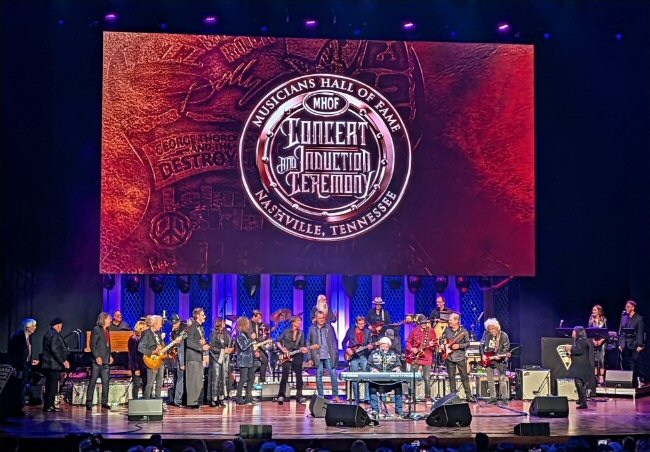
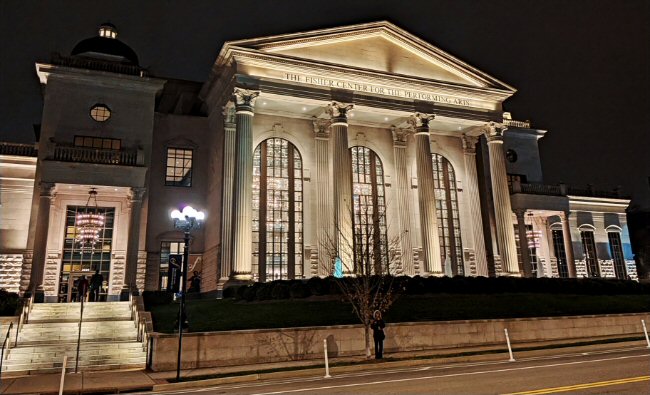
The star-studded grand finale took place on the campus of Belmont University. Related Links: For more information on the MUSICIANS HALL OF FAME and the other organizations mentioned please visit the following links - Musicians Hall of Fame & Museum | Musicians Hall of Fame & Museum FB Page | The Fisher Center
|
|
. |

|
|
|
|
|
|
|
All Rights Reserved |