|
|
|

|

|

|

|
|

|

|

|

|

|
|
Paul Is Dead-On in Capturing the Triumph and Turbulence of Early Beatlemania at the Frist in Nashville
It was a year that began with meeting one Beatle - Ringo Starr - during his appearance at the Musicians Hall of Fame in Nashville. So, what better way to finish off our amazing 2025 than by taking in the expansive and exhilarating exhibition called Paul McCartney Photographs 1963–64: Eyes of the Storm (running through January 26, 2026) at the Frist Art Museum. We arrived early on Friday, December 26 to beat the holiday crowds. We were glad to have attended this fine showcase curated by the cute Beatle because it really was eye-opening in a variety of ways.
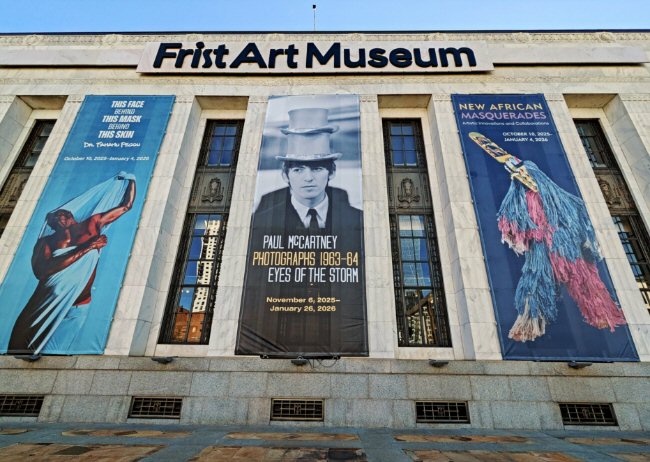
The Frist Art Museum offered ample space for Paul McCartney's expansive exhibit. The Frist Art Museum's exhibition Paul McCartney Photographs 1963–64: Eyes of the Storm presents more than 250 images McCartney shot during the Beatles' rapid rise to international fame. Taken between late 1963 and early 1964, the photographs document the band's travel, performances, and day‑to‑day life at the height of early Beatlemania. Rather than staged portraits or retrospective commentary, the collection offers a direct, first‑person record of how the Beatles experienced that period - capturing them as working musicians and young men adjusting to unprecedented public attention. The exhibition emphasizes how closely McCartney documented the Beatles' daily environment during their early breakthrough years. His photographs show the group in practical, unguarded settings - backstage, in transit, in hotel rooms, and during brief pauses between public appearances. Because the images were taken by a member of the band rather than an outside photographer, they provide a direct record of how the Beatles actually lived and worked during this period. At the Frist, the material is organized to give visitors a chronological sense of the group's movements and experiences from late 1963 through their first U.S. visit in 1964. The exhibition also highlights the unusual history of the photographs themselves. McCartney rediscovered these images decades after they were taken, having stored them away and largely forgotten about them. Their late emergence adds context to the show, pairing the immediacy of the 1963–64 material with McCartney's later decision to organize and present it publicly. At the Frist, this background helps frame the photographs as both primary documentation of the Beatles' early years and archival material that only recently became available for public viewing. Visitors will find themselves drawn to the contrasts: the Beatles' public frenzy versus their private stillness, the polished suits versus the exhaustion in their eyes, the roar of the crowd versus the quiet moments McCartney captured when no one else was watching. One particularly striking thread is the way the images reveal the band's camaraderie - George Harrison lost in thought, John Lennon cracking a half‑smile, Ringo Starr leaning into the absurdity of it all. These aren't the Beatles of album covers; they're the Beatles of lived experience. The Frist organizes the exhibition to follow the Beatles' movements during late 1963 and early 1964, using room‑by‑room transitions and color changes to mark each location. The Liverpool section is presented against a red backdrop, while the Miami material appears in galleries painted in cooler blue tones, with London and Paris arranged in between. This layout helps visitors track the chronology of the photographs and understand how quickly the band's schedule expanded during this period. Nashville is one of the U.S. venues included on the exhibition's international tour, and the Frist's Upper‑Level Galleries provide enough space for the full set of more than 250 images to be displayed in sequence. Eyes of the Storm underscores how McCartney used photography as a practical way to record the Beatles' rapid transition from local performers to international figures. Though not trained as a photographer, he documented the group's travel, work routines, and private downtime with the access only a band member could have. The images reflect the realities of youth, constant movement, and the pressures of sudden visibility, offering a straightforward record of how the Beatles experienced this period rather than how history later framed it. For Nashville audiences, the exhibition presents the band not as established icons but as four young musicians navigating circumstances they were still learning to understand, giving the photographs their lasting relevance.
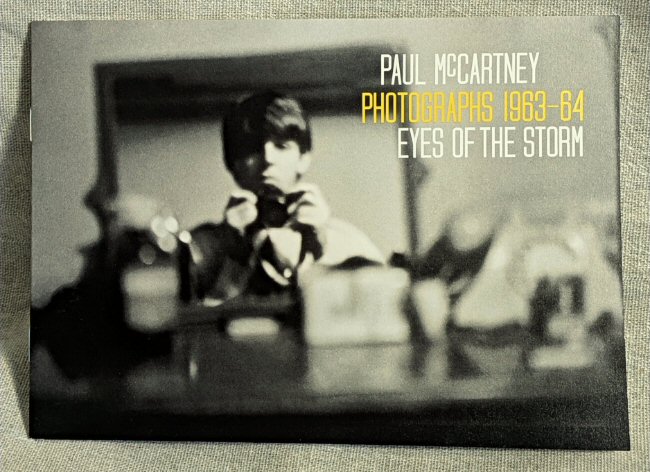
The booklet we received upon entering the upstairs gallery. Related Links: For more information on EYES OF THE STORM and the other organizations mentioned please visit the following links - Frist Art Museum | Paul McCartney.com Exhibitions | Ringo Starr Adds Palpable Star Power to the Musicians Hall of Fame in Nashville
|
|
. |

|
|
|
|
|
|
|
All Rights Reserved |