|
|
|

|

|

|

|
|

|

|

|

|

|
|
From Walden to the Posthuman: A Journey Through Survival at the Frist Art Museum in Nashville
At first glance, the current trio of exhibits at the Frist Art Museum might seem disparate and unrelated to one another. One examines Jewish ceremonial art and history. Another explores the looming impact of artificial intelligence and humanity's future through immersive technology. The third looks back to Henry David Thoreau's observations of nature. Yet during an evening visit to the museum on Thursday, Novermber 12, 2026 - we ultimately came away with a common thread connecting all three exhibitions. Each, in its own way, grapples with the fragility of existence and the question of what survives as the world changes around us.
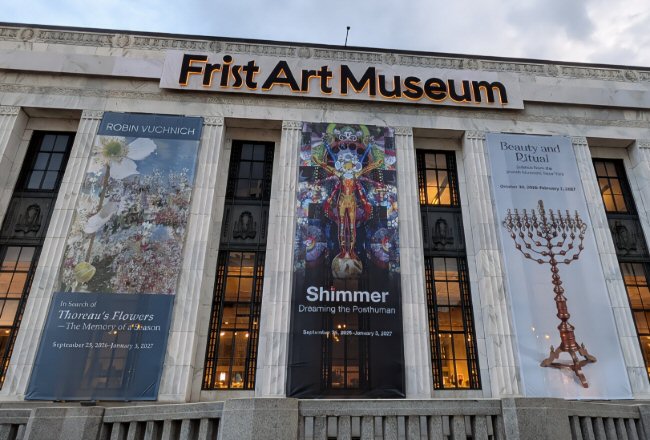
Art, insight, and discovery times three at the Frist Art Museum. Robin Vuchnich: In Search of Thoreau's Flowers-The Memory of a Season is perhaps the most subtle of the three exhibits, but its message may be the most urgent. Inspired by Thoreau's meticulous observations of the natural world, the exhibition reflects on the beauty of landscapes that once flourished and the increasingly fragile state of the environment today. While the exhibit celebrates the natural world, it also serves as a warning about what humanity stands to lose if that world continues to disappear. One of the exhibition's most impressive installations transforms an entire room into a sweeping visual experience. A continuous wall of projected video immerses visitors in the peaceful and vibrant scenery that Thoreau himself might have encountered during his explorations around Walden Pond. The effect is calming and beautiful, yet beneath the serenity lies an unmistakable sense of melancholy. The viewer is invited not only to enjoy these scenes but also to consider how much of that landscape may already be gone.
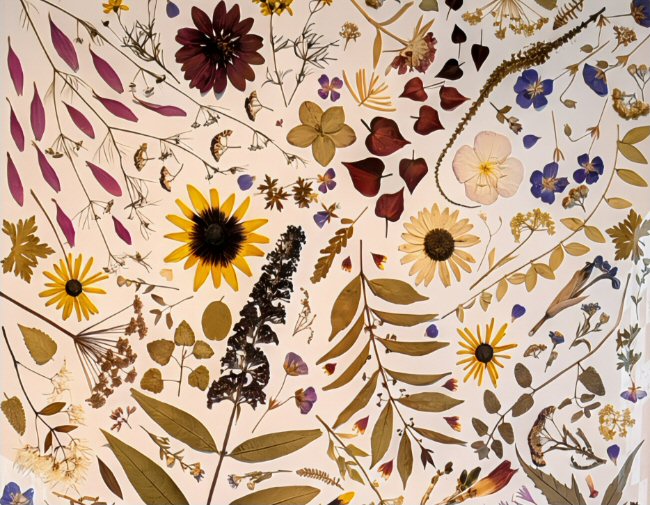
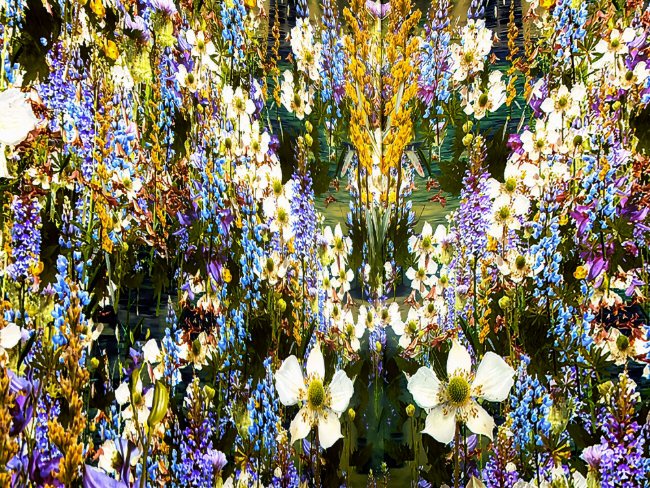
At Robin Vuchnich's In Search of Thoreau's Flowers-The Memory of a Season in Nashville. That message becomes unavoidable in one of the exhibition's most dramatic revelations. Visitors learn that well over half of the plant specimens Thoreau carefully collected, cataloged and pressed during his lifetime are no longer present in the Walden Pond area. What begins as an artistic meditation on memory becomes a sobering commentary on environmental change and the quiet disappearance of species that once seemed permanent. If Vuchnich's exhibition warns of the loss of nature, Shimmer: Dreaming the Posthuman asks a far larger question: what becomes of humanity itself? Bringing together artists working in traditional and emerging media, the exhibition explores whether humans are truly superior to other forms of life and, if so, whether we have used that position responsibly. Through a combination of digital installations, video, sound and immersive experiences, visitors are challenged to confront humanity's impact on the planet and imagine what might come after us. Among the most fascinating aspects of Shimmer is its extensive use of advanced technology to communicate ideas of ritual, evolution, extinction and transformation. Artificial intelligence plays a recurring role throughout the exhibition, with some works proposing that human intelligence and knowledge could one day be transferred to, or preserved within, the very machines that ultimately outlast their creators. Rather than celebrating technology uncritically, the exhibit encourages viewers to consider whether innovation will save humanity or simply document its passing.
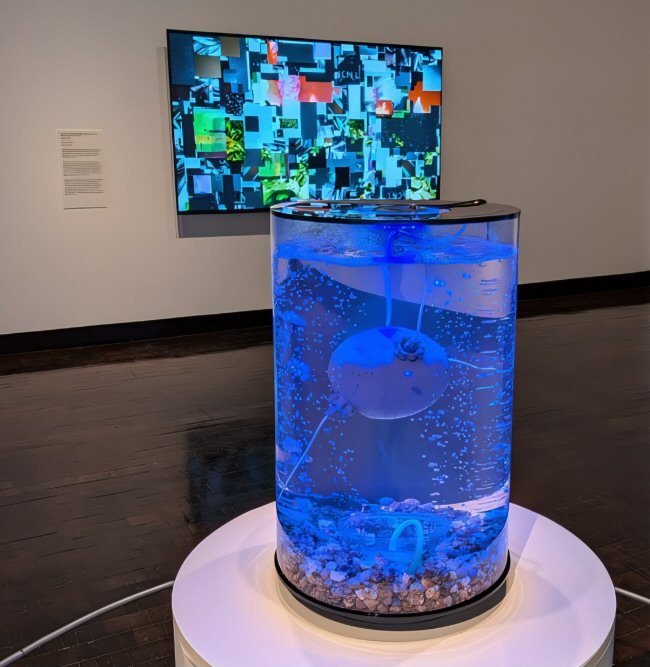
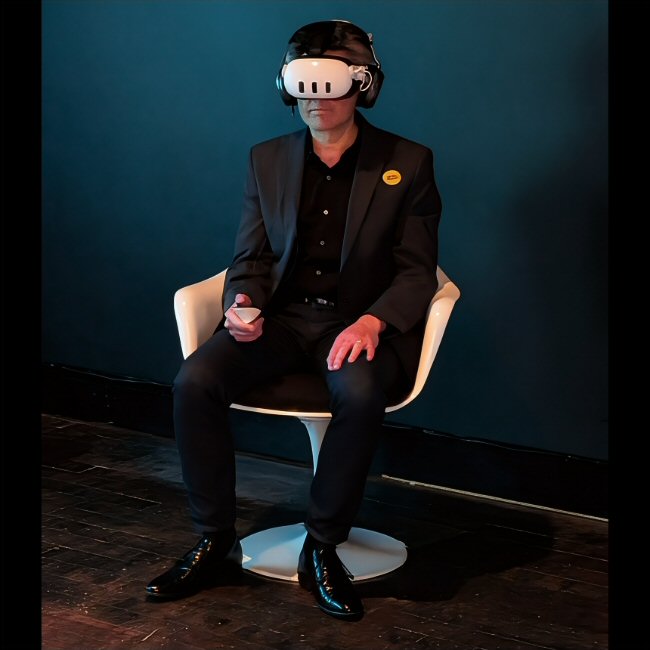
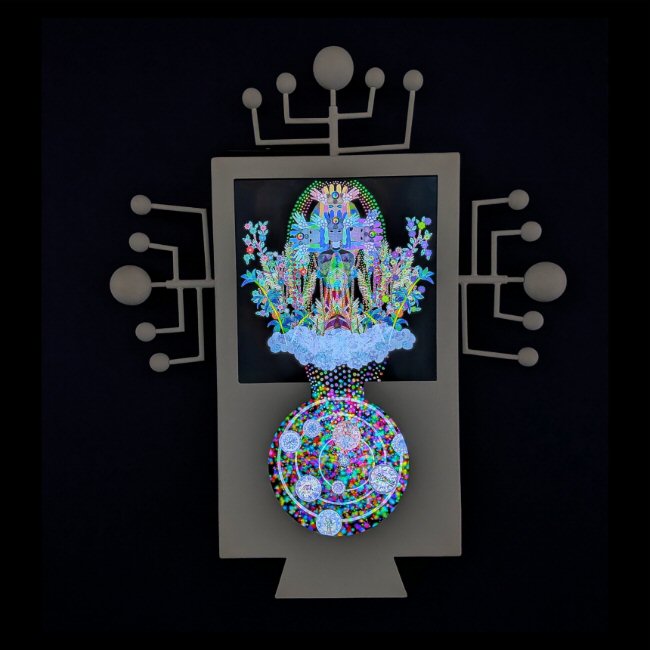
If we're being honest, several parts of Shimmer made us shudder. The result is one of the most unique exhibitions ever presented at the Frist. Soundscapes, moving images, interactive digital elements and virtual reality experiences combine to create an environment that feels less like a traditional art exhibit and more like a journey through possible futures. Some of those futures are hopeful. Others are decidedly unsettling. All encourage visitors to think about the consequences of humanity's relationship with both technology and the natural world. While the first two exhibitions focus on potential loss, Beauty and Ritual: Judaica from the Jewish Museum tells a story of remarkable survival. Featuring ceremonial objects, silverwork, books, textiles and menorahs spanning centuries, the exhibition demonstrates how faith, culture and tradition can endure despite repeated efforts to erase them. Particularly striking is a painted mural depicting Nashville's historic Jewish synagogue, a building that once served as a center of community life before eventually giving way to the site now occupied by the Main Library's parking garage. Like the exhibitions surrounding it, the mural serves as a reminder that places change, landscapes evolve and physical structures disappear. Yet cultural memory often survives long after the buildings themselves are gone. Viewed together, the Frist's current exhibitions reveal far more than their subjects initially suggest. Whether examining vanished wildflowers, imagining a posthuman future or celebrating a people whose traditions have endured for millennia, each exhibition wrestles with the same fundamental questions. What do we preserve? What do we lose? And what remains after change has swept through the world? Through art, history and technology, the Frist Art Museum offers three very different answers, all connected by a shared meditation on survival, memory and the enduring struggle against disappearance.
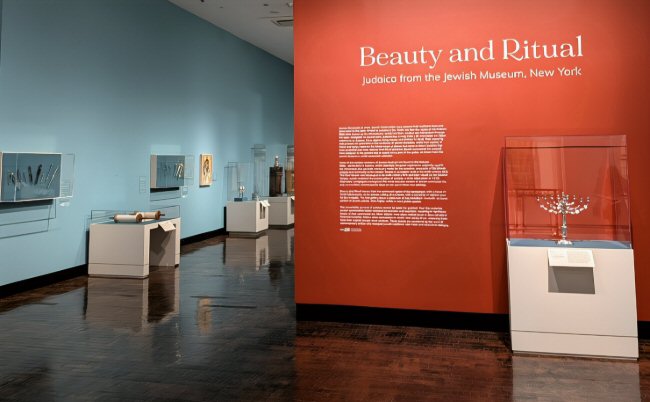
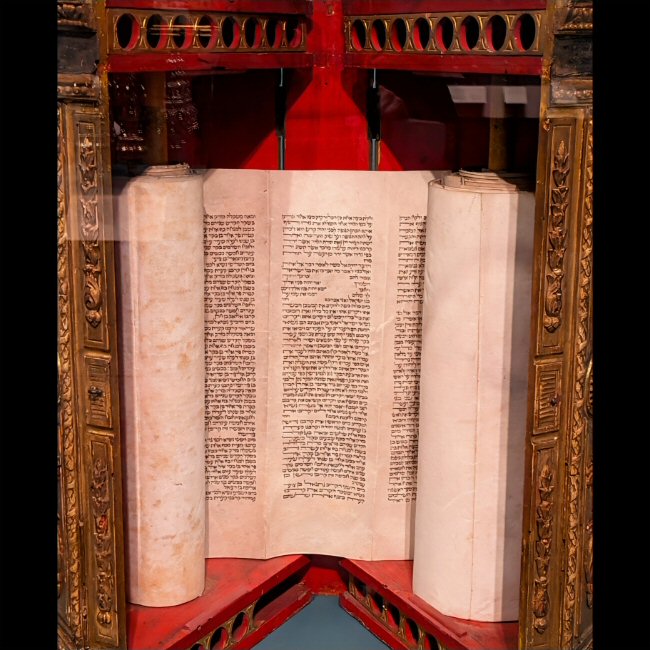
Beauty and Ritual: Judaica from the Jewish Museum honored centuries of faith and endurance in the 615. Related Links: For more information on the FRIST ART MUSEUM and the other organizations mentioned please visit the following links - Frist Art Museum | A Living Lineage: Indigenous Artists Reimagining Abstraction Across a Century at the Frist in Nashville | Frist Art Museum Presents Surrealism Retrospective and Agha's Immersive Light Works in Nashville | New Exhibit Makes a Great First Impression on Opening Day at the Frist Art Museum in Nashville
|
|
. |

|
|
|
|
|
|
|
All Rights Reserved |